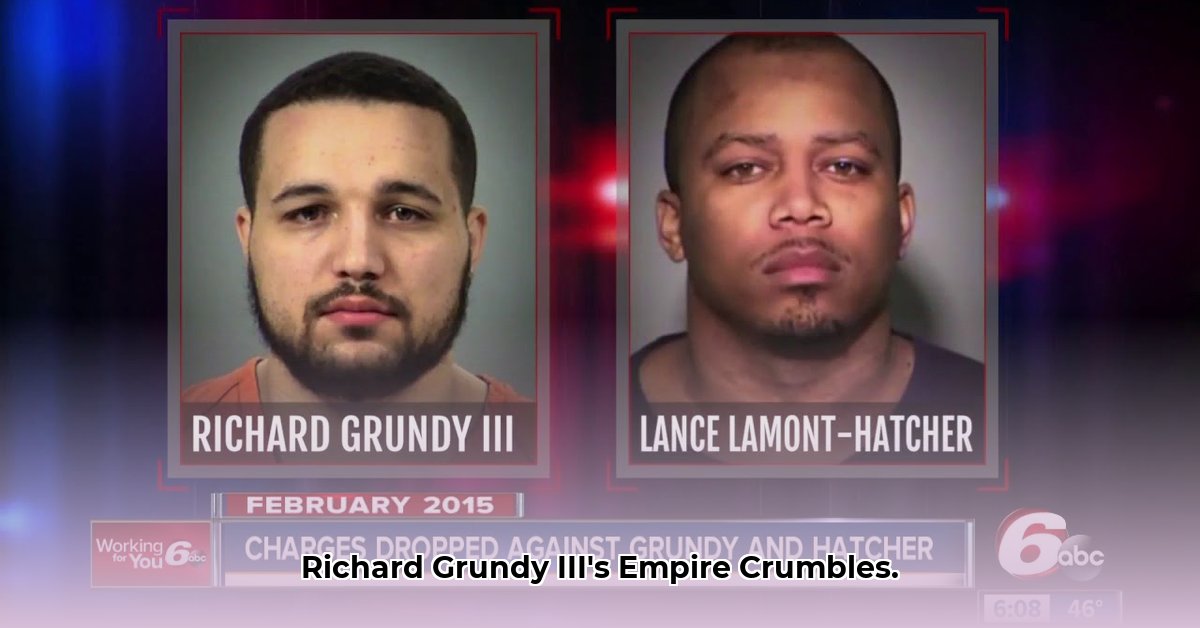
Richard Grundy III's net worth remains undisclosed, a detail overshadowed by the far more significant impact of dismantling the Grundy Crew, a major Indianapolis drug trafficking organization. While the precise extent of his wealth remains unknown, the consequences of his criminal enterprise and its takedown far outweigh any monetary value. This story transcends financial figures; it's about the intricate workings of organized crime, the challenges of law enforcement, and the lasting effects on a community.
The Long Arm of the Law Catches Up
The Grundy Crew's downfall wasn't sudden; it resulted from a prolonged, intricate investigation. Federal agents meticulously gathered years of evidence through surveillance, wiretaps, and confidential informants. This methodical approach led to Grundy's arrest and the apprehension of over twenty associates. These weren't just street-level dealers; they comprised a structured hierarchy, each playing a defined role—from sourcing and financing drugs to distribution. The successful prosecution showcases federal law enforcement's persistence in combating entrenched criminal networks. However, the long-term effectiveness of this disruption remains uncertain.
Beyond the Drugs: Violence and the Shadow of the Law
The Grundy Crew case highlights organized crime's multifaceted nature. While Grundy's life sentence for leading drug trafficking represents a major victory, his prior acquittal on murder charges, despite credible accusations of violence linked to his organization, raises serious concerns. Did focusing on drug charges effectively neutralize the organization's violent wing, or merely remove its leader? Some experts argue for a more comprehensive approach that addresses the underlying violence alongside drug trafficking. Authorities might have won one battle, but the war against violence may continue.
Indianapolis: A Community's Scars
The Grundy Crew's activities didn't occur in isolation. Their operation flooded Indianapolis with illegal drugs, fueling addiction, escalating violence, and creating fear in several neighborhoods. The network's disruption undoubtedly brought positive change to the city. Crime rates potentially decreased in some areas, offering community relief. However, the long-term consequences remain unclear. Did these convictions permanently eliminate the threat? Or did they simply open a vacuum for other criminal organizations to exploit? This question challenges researchers and community members alike.
The Legal Labyrinth: Trials and Tribulations
The decision to relocate Grundy's trial to Evansville, Indiana, aimed to secure an impartial jury, highlighting the difficulties inherent in high-profile cases. This underscores the complexities of prosecuting organized crime. Grundy’s daughter's comments during the trial further illuminate the tension between justice and procedural fairness. The legal system strives for balance, yet its overall effectiveness remains a topic of constant debate.
Looking Forward: A Holistic Approach
The Grundy Crew case, despite significant convictions, underscores the complexities of battling organized crime. Simply relying on strict drug laws is insufficient to tackle the root causes of violence and addiction. A comprehensive approach is essential, encompassing enhanced law enforcement, community initiatives (addiction prevention and rehabilitation support), and increased social services to address the underlying issues fueling such criminal activity. The future demands a more holistic strategy to prevent the emergence of similar organizations. The lack of public information regarding Richard Grundy III's net worth serves as a stark reminder of organized crime's insidious nature and destructive reach.
Key Players and Their Sentences (Data pending verification)
| Name | Role | Sentence |
|---|---|---|
| Richard Grundy III | Leader, Grundy Crew | Life Imprisonment |
| (Placeholder) | (Placeholder) | (Placeholder) |
| (Placeholder) | (Placeholder) | (Placeholder) |
(Note: This table requires completion with verified data from official court records.)
How Effective Are Federal Interventions in Dismantling Large Drug Trafficking Organizations?
Key Takeaways:
- Federal interventions, while yielding significant drug seizures and arrests, face evolving trafficking methods.
- The High Intensity Drug Trafficking Areas (HIDTA) program demonstrates a strong return on investment, highlighting the effectiveness of targeted interventions.
- The ongoing opioid crisis, fueled by fentanyl and counterfeit pills, underscores the need for persistent and intensified efforts.
- International collaboration is critical for dismantling transnational drug trafficking organizations.
- Data analytics and intelligence sharing are crucial for identifying and disrupting drug networks.
The Richard Grundy III case, culminating in a life sentence, illustrates the broader fight against drug trafficking in the United States. His "Grundy Crew" wasn't merely local; it showcased the challenges inherent in disrupting major networks. How effective are federal interventions in dismantling large drug trafficking organizations? The answer, as the Grundy case shows, is complex.
Successes and Setbacks
The sheer scale of annual drug seizures—millions of pounds of narcotics—demonstrates some success. Operations like "Operation Keyboard Warrior," targeting dark net markets, reveal coordinated law enforcement capabilities. However, the persistent opioid crisis and alarming overdose deaths paint a less optimistic picture. Are these victories sufficient? The continuing high death toll suggests otherwise. Drug trafficking constantly evolves.
The Evolving Landscape
Drug traffickers adapt quickly, shifting from dark web marketplaces to exploiting social media and e-commerce. End-to-end encrypted communications further complicate investigations. It's a continuous game of cat and mouse, with criminals constantly innovating.
The Importance of HIDTA and Collaboration
The HIDTA program's success underscores the value of focused, multi-agency efforts. Its high return on investment proves that targeted strategies can be highly effective. This success extends beyond arrests; it impacts the community. And what about international collaboration? Successful takedowns frequently necessitate cross-border cooperation, highlighting the need for strong international partnerships.
Data-Driven Strategies: The Future?
Data analytics are increasingly vital. Analyzing financial transactions, prescription patterns, and other data points helps law enforcement identify suspicious activities and dismantle networks more efficiently. Intelligent data analysis facilitates proactive disruption rather than merely reactive responses. But can data alone solve the problem? Human intelligence and ground-level effort remain essential.
The Future of Federal Intervention
Combating drug trafficking necessitates a comprehensive approach that includes:
- Increased funding for programs like HIDTA.
- Enhanced law enforcement training for encrypted communications.
- Stronger international cooperation.
- Improved public awareness campaigns.
- Focus on harm reduction strategies.
The path forward involves continuous adaptation. There's no single solution, but sustained vigilance, technological advancements, and collaboration are critical to success in this ongoing battle.